Showing posts with label Japanese food. Show all posts

Saturday, February 10, 2018

Japan Food Trip Day 3: Kuromon Ichiba, Kushikatsu Daruma Tsutenkaku

Our trip to Japan feels like such a long time ago now. Anyway, I'm going to try my best to recount the details. My fault for not having any motivation; I just didn't feel like writing again until today.

So we're now on day 3. It was a rainy day and started out quite late. We headed straight to Kuromon Ichiba Market (黑門市場) for brunch. The market is a covered street with several side streets; it's quite easy to lose your way in the crowds. But we tried to explore every nook and corner before we decided on what to eat. The first thing we decided to eat was tempura at a stall called Nisshindo (日進堂).

Lining up to buy tempura at Nisshindo, Kuromon Ichiba

Different kinds of tempura to choose from

The tempura (天ぷら) was pre-fried and displayed on a rack at the front of the stall. They had a variety to choose from which they sold by piece somewhere around 100-150 yen. A couple were more expensive though, like the ebi (shrimp) which was 300 yen and the anago (conger eel) which was 600 yen. I think we bought an ebi, chikuwa (fish cake shaped like a tube), fish, and kabocha (winter squash) tempura to share. They refried a couple to heat it up, and gave us some straight from the rack. It was a bit greasy but yummy. Just an appetizer for what was still to come.

It was a cold day and the boiling hot oden at Ishibashi Shokuhin (石橋食品) was calling to us, so that's what we tried next. Oden is a lot of different ingredients boiled together in a light soy-flavored dashi broth until they absorb all the flavors. You pick which ingredients you want by piece. Most cost 100 yen except one which was 140 yen. We chose aburaage (fried tofu), daikon raddish, konnyaku (konjac), and satsuma-age (fried fish cake). They cut it up into bite-sized pieces for you and you eat it with a stick.

It was difficult to get a clear shot of the oden shop with all the people passing by.

Can you see how hot the oden is?

We didn't even attempt to take a picture of the oden we bought. Balancing a paper plate filled with piping hot food with broth is dangerous business. A lady who bought oden before us spilled the boiling hot liquid on herself while she was eating. Ouch!

And then it was time for the most important part of coming to Kuromon Ichiba: sushi! There were numerous sushi shops to choose from, and we settled for Kuromon Nakagawa (黑門中川) because they had affordable, fresh-looking sushi and also because there seemed to be a lot of people eating there. We chose an assorted set so we could try different kinds of sushi. It cost 2,500 yen. I found that I like the salmon roe and scallop sushi - that was the first time I'd tried both. Princeton went crazy over the fatty tuna (ootoro) sushi, raving that it "melts in your mouth". :-D

Kuromon Nakagawa makes fresh sushi packs right there.

Assorted sushi at Kuromon Nakagawa, cost: 2,500 yen

Wanted to get one of each pack too (salmon, shrimp, scallop sushi) but that would've been too much. Hehe.

We walked around some more and found a fresh soymilk shop manned by a pleasant old man. It was the freshest, creamiest tasting soymilk we'd ever had. Yum!

I think he makes the soymilk and other soy products like tofu right there in the shop.

Our stomachs full, we proceeded to the nearby Sennichimae Doguyasuji Shotengai (千日前道具屋筋商店街) where all sorts of cooking equipment and eating utensils can be found. I fell in love with the cat-designed bowls and cups! Unfortunately, they're difficult to put in your suitcase so I contented myself with just snapping a picture. We did buy those melanine chopsticks that you find in some Japanese restaurants - Princeton's are black and mine are red. Hehe.

Would you believe the one photo I took of the cute cat-designed bowls and cups got corrupted?! Waaah!

We explored Sennichimae Doguyasuji Shotengai then walked on to Shinsekai. Along the way, we explored what I think was Ebisubashi Shopping Street. It was nighttime when we arrived at our dinner destination Kushikatsu Daruma Tsutenkaku (串かつだる). I'd read that this place usually has a long queue so we were happy to see that the line wasn't bad at all.

We waited until the short queue of people went in so we could take a clear shot of Kushikatsu Daruma Tsutenkaku.

This is what you see upon entering Kushikatsu Daruma Tsutenkaku. You sit on a counter around the kitchen.

"English menu wo arimasu ka?" I asked one of the waiters. (Do you have an English menu?) To which he promptly pulled out an English menu and spoke to us in perfect English! We ordered the Combo Tsutenkaku which is composed of 15 assorted pieces of kushikatsu (breaded deep-fried skewers of meat, vegetables, seafood, even cheese) and a complimentary doteyaki (beef sinew with konnyaku stewed using miso, sweet sake, and sugar). Price = 2,160 yen. It was delivered to us straight from the fryer.

Complimentary doteyaki at Kushikatsu Daruma Tsutenkaku

The first 13 pieces of kushikatsu; the remaining two were delivered later.

The waiter told us exactly what each piece was when she put the pan in front of us, but we forgot the moment she turned her back. We weren't the only ones, however, as we heard some of the other diners expressing the same thing. Hehe.

You dip the skewer in the sauce which is in the rectangular metal bowl behind the bowl of cabbage. No double dipping! It's a shared pot of sauce. If you want more sauce, you can use the raw cabbage to scoop it up from the bowl.

A leisurely stroll to the iconic Tsutenkaku Tower after dinner was the perfect nightcap. The lights in Shinsekai were beautiful.

Tsutenkaku Tower, and Shinsekai in general, comes alive at night when all the lights come on.

On the way home, we decided to drop by Osaka Takashimaya Department Store to check out their basement food hall. On the way out, we found Japan's famous Horai meat buns! We bought a couple for breakfast and walked on home.

Horai meat buns for breakfast the next day.

Tuesday, November 28, 2017

Japan Food Trip Day 2: Okonomiyaki, Korokke, Takoyaki

We bought food for breakfast the night before from a discount grocery store called Super Tamade. It was so affordable and surprisingly quite satisfying.

This packed rice bowl from Super Tamade cost only 328 yen.

This large sushi roll cost only 198 yen.

Tenjinbashi-suji Shopping Street was our first stop of the day. (It was supposed to be the Osaka Museum of Housing and Living, but I took so long to get ready we decided to skip it. ;-P) We explored the shops looking for souvenirs and other interesting things, and then it was time for lunch.

Okonomiyaki Chigusa

Okonomiyaki Chigusa is in a small alley in Tenjinbashi-suji Shopping Street.

This is how the alley looks from the side of the main shopping street.

You're probably going to miss this restaurant unless you're really looking for it. First, it's not on the main street; it's in one of the small alleys intersecting Tenjinbashi-suji Shopping Street. But you can use Google Maps to find it - that's what we did. Second, the store's name "Chigusa" is in Japanese. You'll have to look for these characters: 千草.

Here, okonomiyaki (お好み焼き), one of Osaka's specialties, is cooked on the table right in front of you. I think you can opt to cook it yourself, but of course, we chose to have an expert cook it for us. Hehe.


We ordered okonomiyaki and chow mein, each costing 950 yen. The okonomiyaki we chose had a big slab of pork in the middle, although you can't see it in the picture. The serving was a bit small, but delicious. I'd say it was more of a snack than a meal.

Our half-cooked okonomiyaki and chow mein noodles.

So after finishing off every last morsel, we headed off to search for some korokke (コロッケ), Japan's beloved potato croquettes! It was no easy task and we almost gave up. Tenjinbashi-suji Shopping Street is loooong! In fact, it claims to be the longest shopping street in Japan.

Then we spotted some people lining up at a particular store. None of the other shops had queues, so we got curious and took a look. And darn if they weren't selling hot-off-the-fryer korokke!


We quickly fell in line for those scrumptious korokke!

It was only later that I realized that the store was Nakamura-ya (中村屋), the famed korokke shop I wrote in our itinerary as a must-try. The also sold katsu (deep-fried breaded meats), but we bought the korokke. It cost 70 yen per piece.

Korokke wo futatsu kudasai. (Please give me two korokke.)

Finally got our hands on these famed potato croquettes!

We ate them while we explored the rest of Tenjinbashi-suji Shopping Street. They were so good we doubled back after reaching the far end to buy some more.

When it was getting dark, we decided it was time to get going to Hozenji Yokocho Alley where we would explore the collection of 60 small izakayas (Japanese-style pubs) near Hozenji Temple and eat dinner at Hanamaruken, but on the way to the train station, we spotted a takoyaki shop.


Takoyaki (たこ焼き) is also one of Osaka's specialties, so we thought we'd give it a try right on our second day in Japan. We bought 15 pieces for 700 yen as a snack. It was really creamy, delicious and filling that it ended up being our dinner. The large octopus pieces in the middle were tender, too.

Regular flavored takoyaki on the left, spicy on the right.

I got up to snap a photo of their menu framed by the cash register, and that's when I saw that the name of the store was Wanaka (わなか). I had also written Takoyaki Wanaka in our itinerary as a must-try takoyaki shop. It seemed Lady Luck was on our side that day.

Takoyaki Wanaka's menu

Fully satisfied, we decided to end our second day food trip.

Friday, November 24, 2017

Japan Food Trip Day 1: Kamukura Soup With Noodles

Oh yes, our Japan food trip started right on the day we arrived. We got to our Airbnb apartment sometime around 5pm. After our futile attempt to turn on the pocket wifi (the battery was drained; defective charger), we decided to "borrow" wifi from a nearby 7-Eleven to locate our first destination: Dotonbori. We had originally planned to eat at Ichiran Ramen there. However, the extremely long lines at both of their Dotonbori locations and our grumbling tummies necessitated a change of plans. Luckily we found a noodle shop with a much shorter line right across the street that seemed like a good alternative:

Kamukura Soup With Noodles

Entrance of Kamukura Soup With Noodles at Dotonbori

It was a vending machine type restaurant, which we'd never tried before. We observed the locals as they punched in their orders and proceeded to do the same. It wasn't so hard, actually. You just slip in your money and the items that you can choose from depending on how much money you put in light up. You press the items that you want and the machine spits out a very small piece of cardboard which you give to the person or persons behind the counter when you go in. (It was so small I almost didn't notice it.)

Vending machine where you place your order at Kamukura Soup With Noodles

Once we were seated at the counter-style table that circled the people preparing the food, we noticed that nearly all the locals there had ordered karaage (Japanese-style fried chicken) or gyoza so we placed additional orders.

You don't have to go back to the vending machine outside to place additional orders.

We didn't have to wait long for our very generous serving of ramen to be delivered.

I ordered the No. 1 item on their menu, or at least I think that's what it said on the vending machine. Hehe.

Sorry I forgot to take pictures of the gyoza and karaage. We ate them as soon as they were placed in front of us. :-D Everything was delicious! The portion size was so big that I could only finish half of the noodles. Princeton, however, devoured all of his ramen and gyoza and karaage. It was a very satisfying meal.

But I wonder why they don't call their restaurant Kamukura Ramen. Isn't soup with noodles still ramen?

Sunday, July 30, 2017

Where to buy Ohgiya Noriten and Wasabi Aji Fried Ika in Japan

I've been researching where I can get the items in my Japan shopping list, and I realized that two of the items, which I really like, are either unknown to locals or not very popular in Japan.
wasabi seaweed tempura (noriten)

This wasabi fried squid is addicting!
For example, when I googled "where to buy ohgiya noriten in osaka" and "where to buy wasabi aji fried ika in osaka", most of the results I got were from Japan import/export companies. I saw someone on Tripadvisor ask where he could buy Ohgiya Noriten in Nagoya and the Japanese person trying to answer his question didn't know what he was talking about. I also asked our Airbnb host and he has never heard of both delicious Japanese snack items either. (I even messaged him the pictures just to be sure he knew what I was talking about.)

Then I asked my sister-in-law, who had given us some as pasalubong from her trip to Japan before, where she bought them. And guess what? She bought them at the airport.

So are Ohgiya Noriten and Wasabi Aji Fried Ika just for tourists? You know, like dried mangoes and otap for us? (Tourists always buy dried mangoes and otap as pasalubong when they come to Cebu but we locals rarely eat them. Well, speaking for myself anyway.)

Actually, our Airbnb host did say that maybe wasabi flavored snack items are popular in the Kantou area (around Shizuoka or Tokyo). In the Kansai area (especially in Kyoto), it's matcha flavored everything. So it's most probably more of a regional thing. Each region has its own specialty, and a person may not be familiar with another region's specialties. I know there are many times when someone goes home to some province and brings back a local delicacy that I've never heard of. It's probably like that.

Now I know that these two yummy treats are not native to Osaka, but I'm still hoping to find them in a Family Mart, 7-Eleven, Don Quijote or Matsumoto Kiyoshi. :-)

*A "pasalubong" is what Japanese people call "omiyage." It's a customary gift you give to your boss, colleagues or family when you get back from travel. It's kind of like a souvenir. But I think this custom is only practiced in some Asian countries? So you might now know what I'm talking about.

Saturday, January 30, 2016

I'm turning Japanese... I really think so

The IEC week is over! No more roadblocks! Yay! Yesterday was the last day of my weeklong self-imposed house arrest caused by traffic-phobia. Today we painted the town red - a red sun actually, as in the Japanese flag. We started by grabbing onigirazu @ Son-gohan BTC for lunch. I had wanted to try onigirazu for a long time but never got the chance until now. I got the tamagoyaki with crabmeat onigirazu. Princeton got the beef gyusando onigirazu. Both were yummy.

Finally got my hands on this onigirazu! Oishikatta!

Then we went to Kiku Trading to check out their new arrivals. I was looking for a Japanese teapot with a built-in sieve to catch the tea leaves but didn't find any that I liked. I fell in love with these chawanmushi cups instead. Can't wait to use them.

Are these chawanmushi cups? The ones I bought before don't have handles.

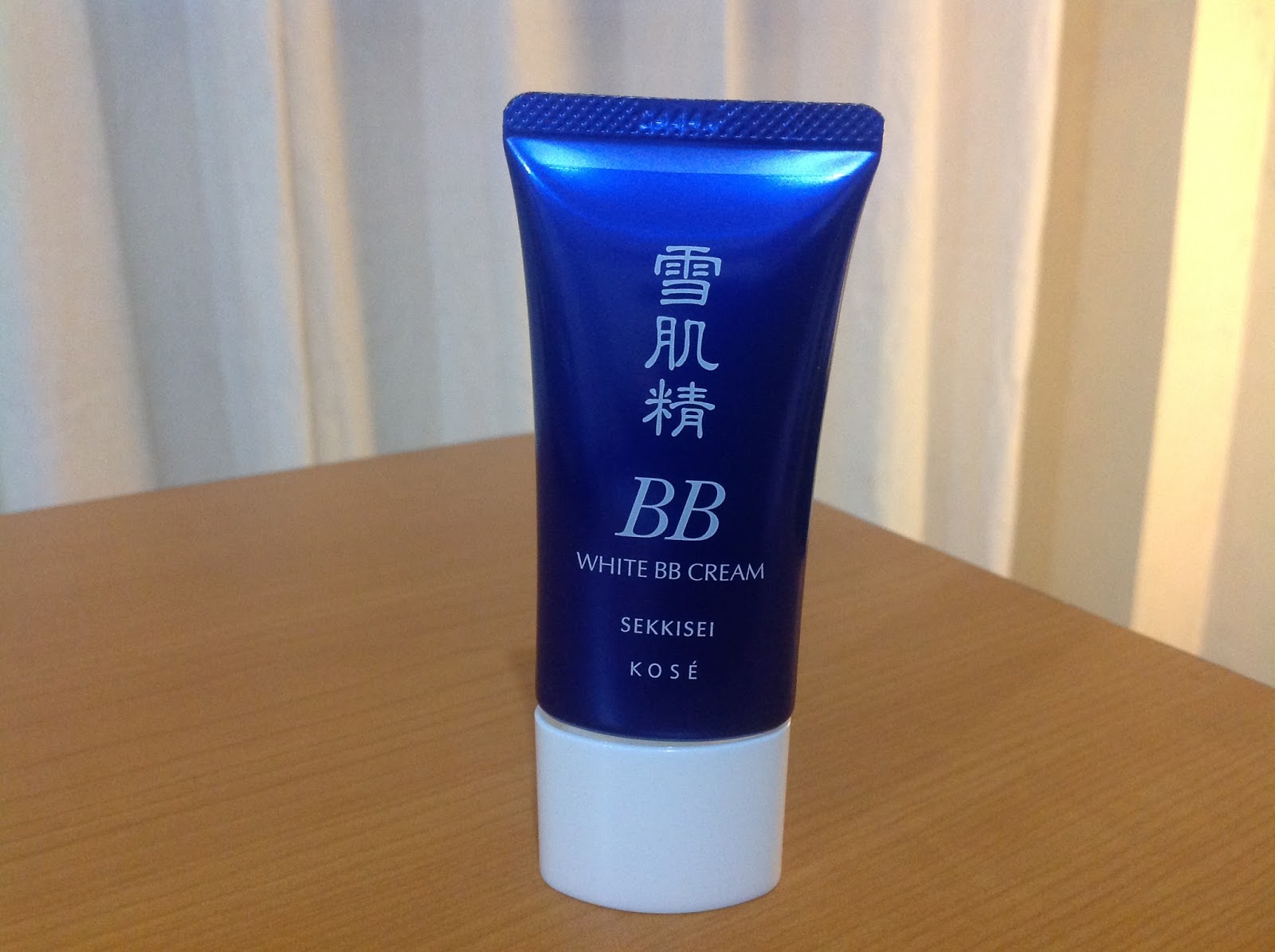
Last I got my Kose Sekkisei BB cream. Thank you, Michelle @ ProtoolsCebu! I'm now one step closer to becoming a Japanese beauty. Bwahahaha!

Trying Kose Sekkisei BB cream in shade 02. Might post a review in the future. ;-p

Got home a bit late today, so I'll be skipping my Japanese lessons. I deserve a break for my diligence these past twelve consecutive days. Hehe. ;-p

Monday, September 10, 2012

Japanese Food: Monjayaki

Most people only think of sushi, sashimi, tempura or ramen when Japanese food is mentioned, but there are a lot of other Japanese foods besides these! Here is one I would very much like to try - it's called Monjayaki. The main ingredient of monjayaki is cabbage mixed with some meat, other vegetables, and a thin batter. It's cooked right at your table and you eat it straight off the hot plate with a small metal spatula. Yum!


Oishisou desu ne? [Looks delicious, doesn't it?] ^_^ This monjayaki looks delicious as well:


Monjayaki is said to have originated in the Tsukushima District of Tokyo, and many monjayaki restaurants can be found there. I'll have to go to Tokyo then. :)

Monday, August 9, 2010

Local Cuisine of Hokkaido, Japan

Seafood
Hokkaido has a rich variety of fresh fish and seafood such as crab, scallops, sea urchins, salmon roe, salmon, herring, flounder, cod, arabesque greenlings, squid, octopus, shrimp, abalone, surf clams and kelp which are harvested from the northern seas of Japan and are rated among the best of their type for their exquisite taste and flavor. The crab in particular is exceptional.


Ishikari-nabe
Ishikari-nabe is a typical dish of Hokkaido made from chunks of salmon which are stewed with vegetables, tofu and konnyaku (devil's tongue) in kelp stock flavored with miso. Locally produced potatoes and cabbage are also added to the delicious flavor of this hearty dish which utilizes fresh salmon from head to tail.


Genghis Khan nabe
The Genghis Khan nabe, a dish in which thinly sliced mutton and vegetables (bean sprouts, cabbage and pumpkin) are basted and roasted, is renowned for its hearty taste and unique rustic flavor. Many restaurants around Hokkaido specialize in Genghis Khan nabe. The dish is also very popular in large beer parlors.


Photos courtesy of Japan National Tourism Organization.